2026 Rope Rescue Programs
New Class
Aerial Rigging for Rope Rescue
One-day training event, two sessions.
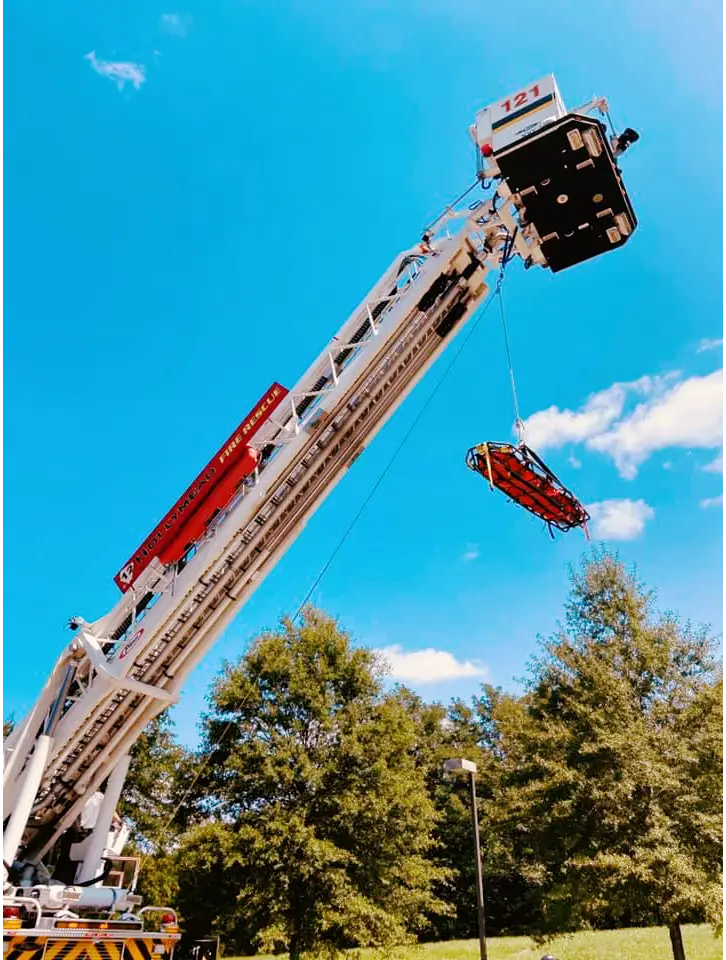
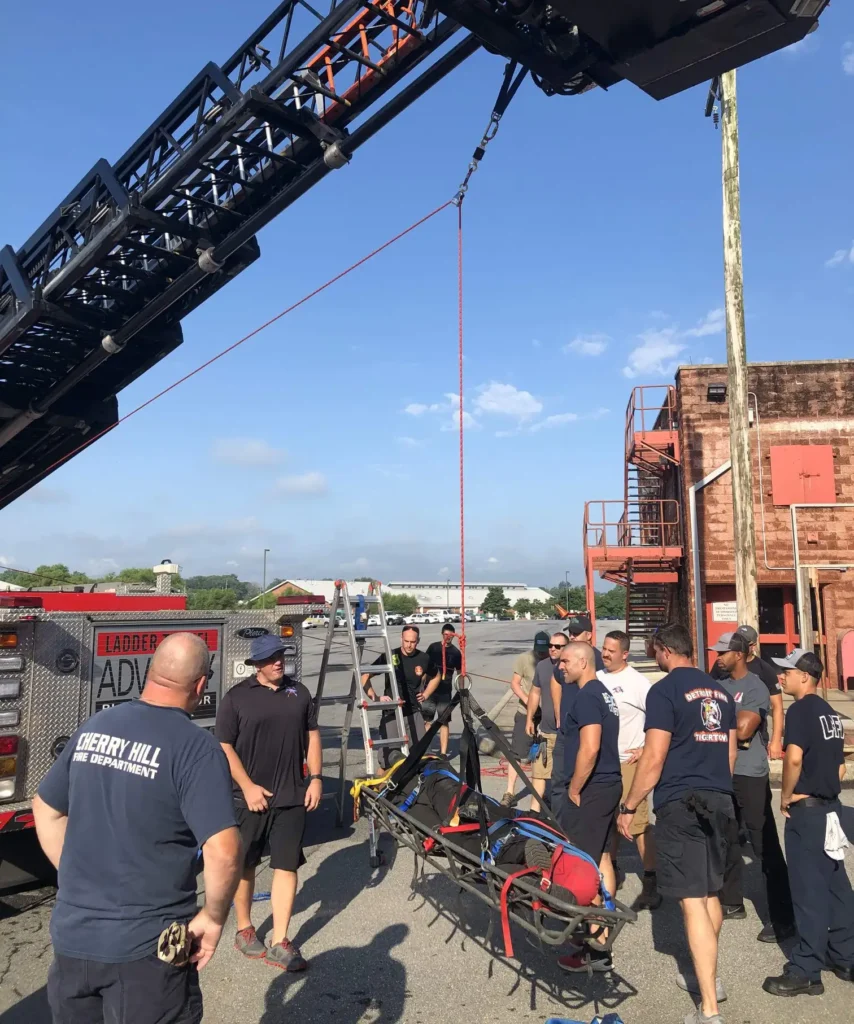
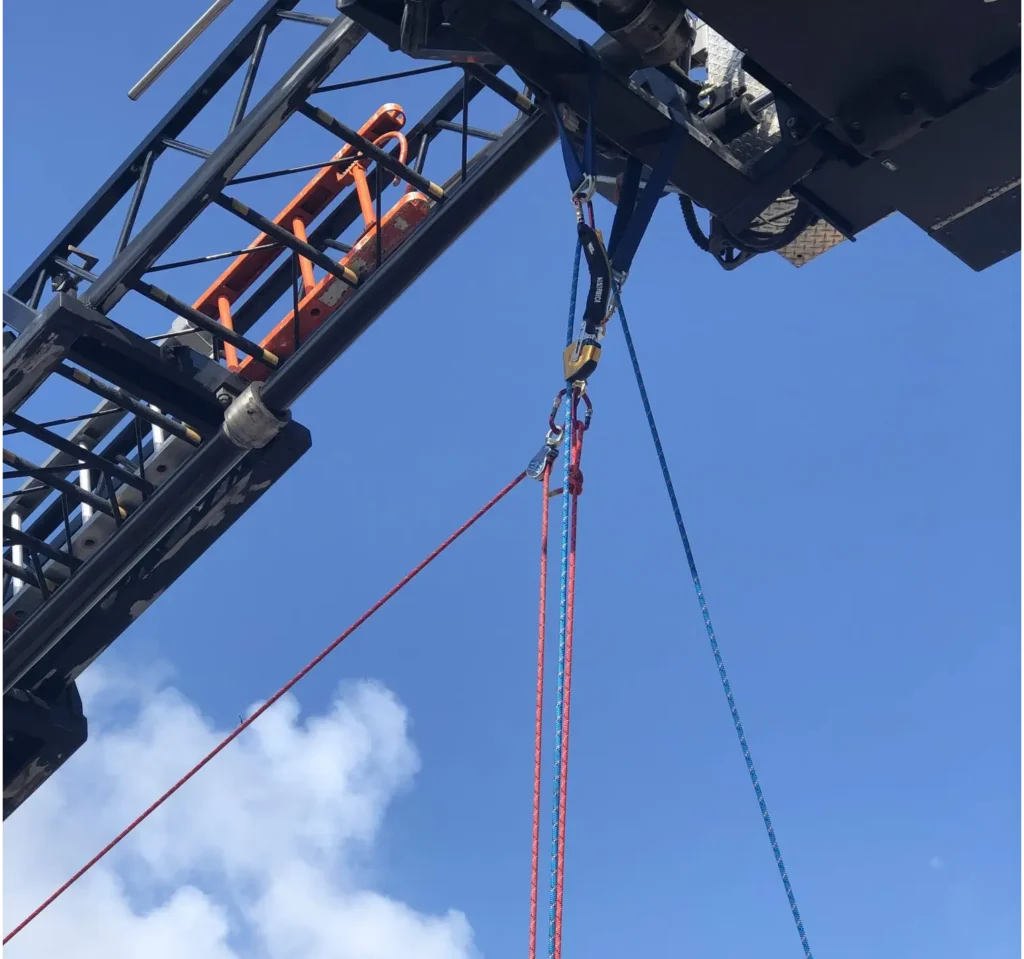
Aerial apparatus are among the most versatile tools available to the fire service, yet they are often used in rope rescue operations without a full understanding of the forces being generated within the system. Small changes in rigging, rope angles, or mechanical advantage can dramatically increase the loads placed on an aerial device, creating unnecessary risk to personnel, patients, and equipment.
This one-day, hands-on course is designed specifically for firefighters, company officers, and apparatus operators who may support rope rescue operations, regardless of their technical rescue background. Participants will explore how aerial apparatus can be safely and effectively integrated into rope rescue systems while gaining a practical understanding of the hidden forces at work.
Through classroom discussion, demonstrations, and field exercises, students will learn how to recognize potentially dangerous loading conditions, communicate effectively between rescue personnel and apparatus operators, and apply proven practices for aerial-supported rescue operations.
Upon completion of this course, participants will be able to:
- Explain the role of aerial apparatus in rope rescue operations.
- Describe how mechanical advantage systems affect forces and apparatus loading.
- Identify common rigging configurations used with aerial devices.
- Recognize factors that can unintentionally increase loads on an aerial apparatus.
- Apply best practices for safe aerial-supported rope rescue operations.
- Improve coordination and communication between rescue personnel and apparatus operators.
By the end of this course, participants will leave with:
- A practical understanding of the invisible forces created by rope rescue systems.
- Greater confidence using aerial apparatus as anchor points and high-directional devices.
- The ability to identify and avoid common rigging and loading mistakes.
- Improved operational awareness when supporting rope rescue incidents.
Click a session to register:
Rope Operations
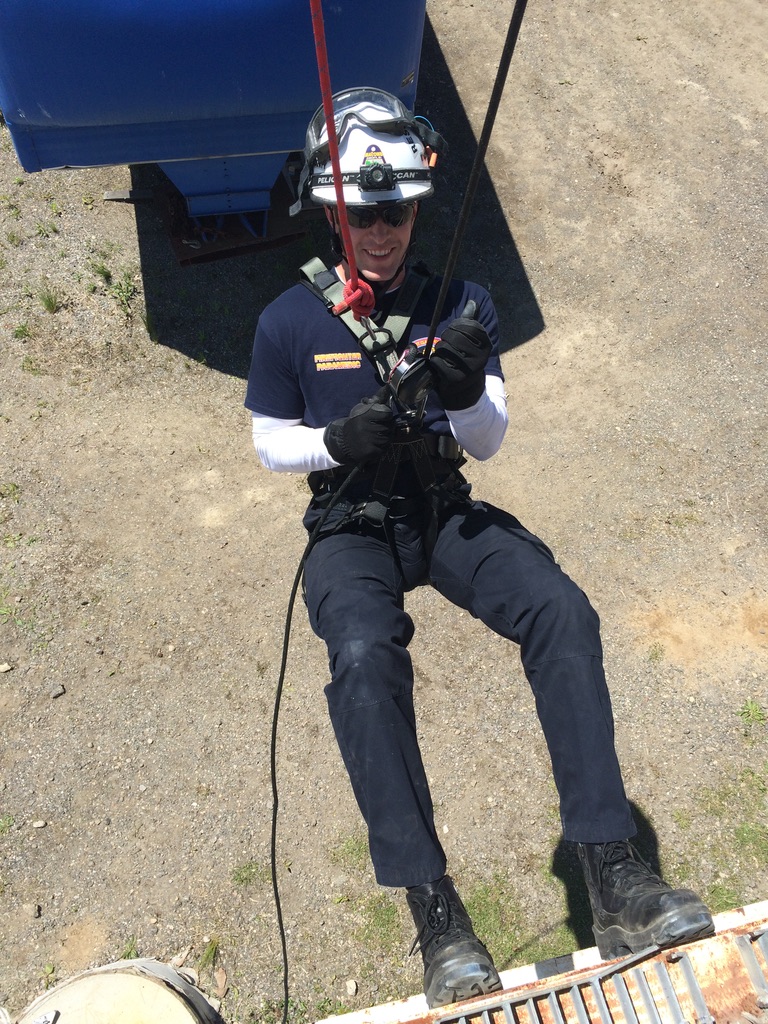
The MUSAR’s Rope Ops. Class is an in-person, 40-hour program designed to address the needs of fire and rescue agencies that may be called upon to perform rope-based rescues from above- or below-grade. This includes the rescue of workers suspended from their fall arrest systems, as well as in support of operations at confined spaces, trench rescues, and structural collapse incidents. This course meets and exceeds the capabilities required in NFPA 2500 (1670) for an Operations level team.
- NFPA Awareness Level Requirements
- Laws & Standards
- Incident Management-Command Considerations
- Safety, Hazard Identification
- Rope Rescue Equipment and PPE
- Knotcraft
- NFPA Operations Level Requirements
- Anchoring, including Ladder A-Frames and Tripods
- *Rappelling and Self-Rescue
- Belay Systems
- Lowering Systems, including Twin Tensioned Rope Systems
- Mechanical Advantage / Pulley Systems
- Patient Packaging
- Both Low and High Angle Litter Operations
- *Pick-off Rescues, Team-based
- System Design
- Rapid Intervention Considerations
While the emphasis is on working as a team to complete the rescues, there are numerous individual skills that are critical to that success. Throughout the program, there is a strong emphasis on basic skills and safety. These fundamentals are important, not just for this program, but as a foundation for all future rope rescue training.
Successful completion of the program requires participants to perform each of the skills, including the on-rope activities
- NFPA Awareness Certification
- NFPA Operations Certification
- Participants will be able to work safely at rope rescue incidents
- Operate the commonly used systems
- Will be familiar with the techniques used during typical rope rescue incidents.
Click a session to register:
Rope Technician
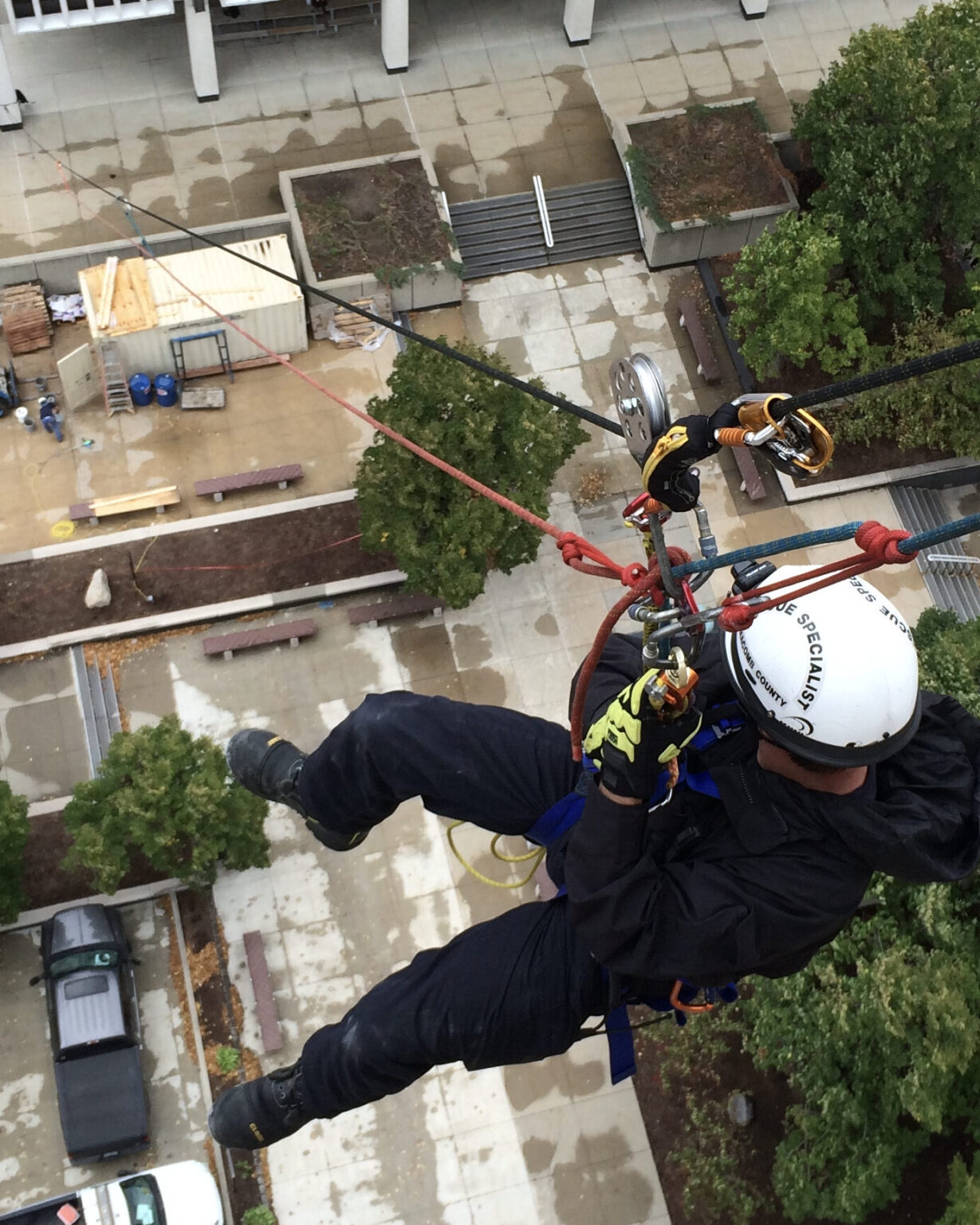
This 50-hour program is a combination of classroom and hands-on, practical activities specifically designed to address the needs of fire and rescue agencies that may be called upon to perform rope-based rescues that exceed the capabilities of an Operations Level trained organization. It is also intended to address the specific rope rescue-related needs of an Urban Search & Rescue Task Force or Regional Technical Rescue Teams. The program addresses all the capabilities listed in NFPA 1670 for a Technician Level Rope Rescue Team.
While the program includes a brief review of some operations-level skills and techniques, participants must, as a prerequisite for this class, be familiar with Operations Level knotcraft, anchoring, lowering systems, belaying, and pulley systems.
- Basic physics of rope rescue as they apply to anchoring systems, friction, and resultants
- Introduction to artificial high directionals and horizontal systems.
- Advanced anchoring,
- Simple, compound and complex pulley systems
- Hot change-overs and the use of the CMC MPD.
- High angle litter work, both with and without an Arizona Vortex.
- Confined space rigging
- Construct a tracking line offset and horizontal system to support swift water rescue.
- Pick-off rescues (two or three person team)
- Rescue from trees and arborist emergencies
- NFPA Rope Rescue Technician Certification
Click a session to register:
Course Manager
Dave Van Holstyn (VH1)
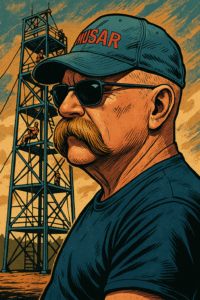
Dave Van Holstyn is the Rope Rescue Program Manager for the Michigan Urban Search & Rescue Training Foundation (MUSAR), where he leads program development, instructor standards, and the delivery of high-quality rope rescue training for the public safety community. A retired Lieutenant and Technical Rescue Coordinator with the Grand Rapids (MI) Fire Department, Dave brings more than two decades of operational and instructional experience to the role. His technical rescue background includes service as a charter member of a confined space rescue team and continued public service as a Rescue Team Manager with Michigan Task Force 1. As a state-certified instructor, Dave teaches across multiple technical rescue disciplines, including confined space, structural collapse, and machine extrication, with rope rescue as his primary focus. He has delivered rope rescue training to fire departments and rescue teams across the United States and internationally, and has presented at national conferences including FDIC, ITRS, and SUSAR. Dave and his wife, Joanne, are lifelong residents of the Grand Rapids area and have been married for 44 years. They have three children and 14 grandchildren.
For more info about the MUSAR Rope Rescue Programs, email VH:
[email protected]